



SCR efficiency explained
AdBlue Delete and Removal describe different approaches to SCR-related concerns; they should not be treated as equivalent repairs. SCR efficiency measures how effectively the catalyst reduces nitrogen oxides in the exhaust. If an efficiency warning appears, identifying the cause is more useful than assuming the tank, sensor or catalyst needs replacing. Send your registration and fault codes so we can assess the likely system fitted and discuss mobile attendance.
- MOBILE VISITS AT YOUR HOME OR WORK
- MOBILE APPOINTMENTS 8AM–8PM
- LIFETIME SOFTWARE WARRANTY
- NO FIX, NO FEE
24/7 Emergency Callouts Available
Emergency Mobile AdBlue Assistance. Additional emergency callout charge applies. Subject to availability.
- Same-Day Appointments Subject to Availability
- Next-Day Appointments Subject to Availability
- Mobile Attendance at Home or Work
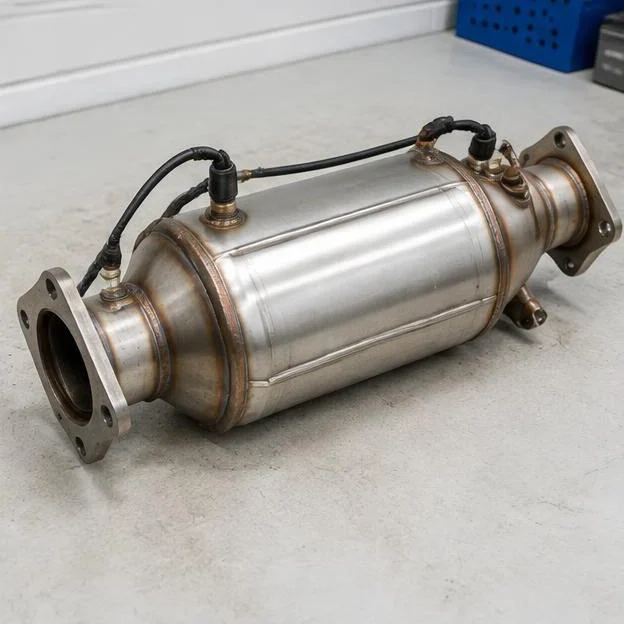
01Understanding the service
What is SCR efficiency and why does it fall?
Selective catalytic reduction uses ammonia derived from injected AdBlue to convert nitrogen oxides into nitrogen and water. The control system assesses conversion under defined operating conditions, including suitable exhaust temperatures. Low measured efficiency can result from inadequate dosing, unsuitable or contaminated fluid, exhaust leaks, misleading sensor readings or catalyst deterioration. A fault code alone does not distinguish these causes.
- An engine-management or AdBlue warning may appear.
- Some vehicles apply a restart countdown or performance restriction, depending on the fault and calibration.
- Crystallisation around the dosing injector can indicate a leak or dosing problem but needs inspection.
- Unusual fluid consumption can support diagnosis but is not proof of catalyst failure.
AdBlue Delete and Removal: what the terms mean
Delete and Removal usually describe software deactivation of SCR functions. Repair aims to restore the system's operation, while Fix is a broad description whose actual scope should be explained. Deactivation does not restore catalyst efficiency or prevent physical component failures. For an efficiency fault, begin with diagnosis rather than selecting an intervention solely from the dashboard warning. Confirm what work can be completed during mobile attendance; some faults may require workshop facilities or recovery.
UK vehicle examples and fitment checks
SCR-equipped Peugeot Partner and Citroen Berlingo 1.6 BlueHDi versions can record efficiency faults, but P20EE alone does not establish an integrated tank or pump failure. SCR-equipped Mercedes-Benz Sprinter and E-Class diesels can also develop dosing, sensor or catalyst faults; fitment varies by engine and production date. Some SCR-equipped Land Rover diesels, including Range Rover Evoque variants, may display a diesel exhaust fluid quality warning. That message does not by itself prove poor fluid quality or a failed catalyst. These model names span different emissions systems, so send your registration to help confirm your vehicle's specification.
Diagnostic considerations and fault codes
Many SCR systems use upstream and downstream NOx sensors, but layouts and diagnostic strategies vary. Efficiency monitoring considers operating conditions and expected conversion, not simply whether one reading is lower than the other. A useful assessment includes all stored codes and freeze-frame data, sensor plausibility, exhaust temperature, dosing pressure and delivery, fluid condition, wiring and exhaust leaks. Manufacturer-specific descriptions and test procedures should guide the diagnosis.
- P20EE: SCR NOx catalyst efficiency below threshold, bank 1. This does not by itself condemn the catalyst.
- P204F: reductant system performance, bank 1. This is a broader system-performance fault, not a specific component diagnosis.
- P207F: reductant quality performance. Check fluid condition and system operation rather than assuming contaminated AdBlue.
What to send before an assessment
Accurate vehicle and symptom details help narrow the checks needed. If the vehicle shows a restart countdown, report its exact wording and remaining distance; do not assume a refill or code clear will cancel it. Follow the vehicle handbook's warning instructions.
- Registration and, if requested, VIN to help confirm engine and SCR specification.
- Current postcode to check mobile availability.
- Photos of warnings and a complete fault-code report where available.
- Mileage, recent repairs, refill history and any leaks or visible crystallisation.
What Happens When We Visit?
From booking to completion, our experienced mobile technicians make the process straightforward.
- 1
Book Your Appointment
We confirm your vehicle, location, service and appointment.
- 2
Technician Calls With ETA
On the day, your technician calls with an estimated arrival time.
- 3
We Arrive & Diagnose
We connect diagnostic equipment, check the vehicle and identify relevant faults.
- 4
ECU Software Work
We read the original ECU software, prepare the AdBlue modification and apply it.
- 5
Final Checks & Resets
Final diagnostics, applicable fault-code resets and checks to confirm the agreed work is complete.
- 6
Payment & Receipt
We take payment, provide a receipt and explain the applicable software warranty.
02Why choose AdBlue Solutions
- Clear Quotation Before Booking
- Experienced Technicians
- 4.9/5 Google Rating • 535+ Reviews
- Nationwide Mobile Service Across England
- No Fix, No FeeSubject to terms
- Lifetime Software WarrantyCovers the software we install
- 24/7 Emergency Callouts AvailableAdditional emergency callout charge applies
Check Your AdBlue Fault Code
Enter a diagnostic code to explore its meaning and the information to send with your enquiry.
8 common codes
- P20E8
Fault name
Reductant pressure too low
What it means
The system has reported insufficient reductant pressure. Diagnostic checks help establish the cause, rather than assuming a failed pump.
VIEW FAULT DETAILS - P20EE
Fault name
SCR NOx catalyst efficiency below threshold
What it means
SCR NOx reduction efficiency has been reported below its expected threshold. The full scan and sensor readings help identify possible causes.
VIEW FAULT DETAILS - P204F
Fault name
Reductant system performance, bank 1
What it means
The code concerns SCR operation or monitoring. Read it alongside the full scan and vehicle-specific information.
VIEW FAULT DETAILS - P2200
Fault name
NOx sensor circuit, bank 1
What it means
The code concerns a NOx sensor circuit or signal. It does not alone confirm which part needs attention.
VIEW FAULT DETAILS - P229F
Fault name
NOx sensor circuit range/performance, bank 1 sensor 2
What it means
The code concerns a NOx sensor circuit or signal. It does not alone confirm which part needs attention.
VIEW FAULT DETAILS - P2047
Fault name
Reductant injection valve circuit/open, bank 1 unit 1
What it means
The code concerns a dosing or aftertreatment injector. Check the fitted system and full scan before assuming a cause.
VIEW FAULT DETAILS - P203F
Fault name
Reductant level too low
What it means
The system reports that the reductant level is too low. Check the actual fluid level and whether the reported level is accurate.
VIEW FAULT DETAILS - P207F
Fault name
Reductant quality performance
What it means
The system has reported reductant quality performance. The code alone does not identify the cause.
VIEW FAULT DETAILS
ADBLUE WARNING ON YOUR DASHBOARD?
Send us your registration, postcode and diagnostic fault code. We'll check the details and explain the available mobile service options.
Customer questions
Questions customers ask us
Still unsure? Send us your registration and a photo of the warning on WhatsApp.
Ask on WhatsAppWhat is AdBlue Delete?
AdBlue Delete refers to a software modification intended to disable SCR dosing, monitoring or related warnings. It does not restore NOx conversion or repair faulty hardware. Send your registration and fault codes for an assessment.
What is AdBlue Removal?
AdBlue Removal is commonly used to describe SCR software deactivation, not necessarily physical removal of the tank or catalyst. It does not repair leaks, damaged wiring or failed components. The scope of any proposed work needs to be confirmed for the particular vehicle.
What is the difference between AdBlue Repair and Delete?
AdBlue Repair aims to restore SCR operation by diagnosing the cause and carrying out the necessary work. This may involve wiring repairs, dosing-system work, sensor replacement or a manufacturer-specified software update. Delete disables functions rather than restoring them; it is not a repair of the underlying fault.
What is an AdBlue Fix?
AdBlue Fix is a general service description, not a specific diagnostic procedure. Resolving a warning or restart countdown requires identifying its cause, completing the appropriate work and checking the result. Clearing codes alone does not establish that a fault has been fixed.
What vehicle and postcode information do you need for a quote?
Please send your registration, current postcode, mileage, warning text and any fault codes. Include recent repairs or AdBlue refills. Your registration helps identify the likely specification, but a VIN, diagnostic scan or component inspection may be needed to confirm the installed hardware. Your postcode helps us check attendance availability.
Can I send my warning light photo on WhatsApp?
Yes. Send clear photos of the warning text and any remaining restart-countdown distance, together with your registration. Photos help with initial assessment but cannot establish which component has failed.
Do you offer 24/7 emergency callouts?
Yes. Our standard hours are Monday to Sunday, 8 AM to 8 PM. Emergency callouts are available 24 hours a day, 7 days a week, subject to location and availability. An additional emergency callout charge applies and is confirmed before dispatch.
Related
Get Your AdBlue Quote
Enter your registration, postcode and mobile number. We'll check your vehicle and reply with a quotation. You can add a photo of your dashboard warning in the WhatsApp chat.
Countdown about to hit zero?
Call or WhatsApp with the warning, miles remaining and where the vehicle is. Emergency callouts carry an additional charge, confirmed before dispatch.