



Can poor AdBlue cause faults
AdBlue Delete and Removal enquiries often begin with the same question: can poor AdBlue cause faults? Yes. Contaminated, diluted or degraded fluid can affect SCR performance and may trigger warnings or a restart countdown. However, those symptoms can also come from dosing, sensor or electrical faults. Send your registration and warning details before assuming the fluid is responsible.
- MOBILE VISITS AT YOUR HOME OR WORK
- MOBILE APPOINTMENTS 8AM–8PM
- LIFETIME SOFTWARE WARRANTY
- NO FIX, NO FEE
24/7 Emergency Callouts Available
Emergency Mobile AdBlue Assistance. Additional emergency callout charge applies. Subject to availability.
- Same-Day Appointments Subject to Availability
- Next-Day Appointments Subject to Availability
- Mobile Attendance at Home or Work
01Understanding the service
How poor AdBlue can affect the system
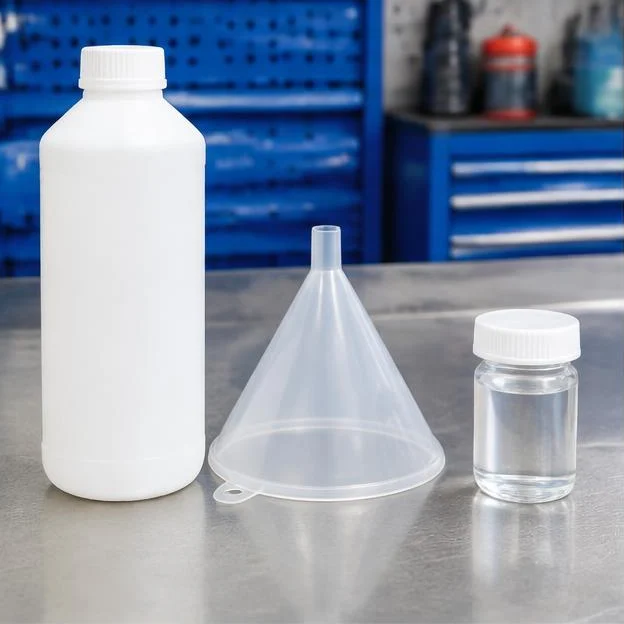
AdBlue is a solution of nominally 32.5% high-purity urea by mass in demineralised water, made to ISO 22241 requirements. Added water, diesel, dirt or other contaminants can affect dosing and exhaust treatment; symptoms are not always immediate. Some vehicles measure fluid quality directly, while others infer a problem from SCR performance. White deposits alone do not prove the fluid is poor: normal AdBlue can leave crystals when water evaporates.
- Incorrect concentration can reduce NOx conversion.
- Contamination can damage or obstruct pumps and dosing components.
- Injector deposits can also result from leaks or dosing problems.
- Warnings and restart restrictions depend on the vehicle and detected fault.
What the fault codes actually mean
P20EE means SCR NOx Catalyst Efficiency Below Threshold, Bank 1. P207F means Reductant Quality Performance. Neither code proves that the AdBlue itself is defective. Possible causes include incorrect fluid concentration, inadequate dosing, NOx sensor faults, exhaust leaks or catalyst problems. Diagnosis should use the complete fault record and relevant live data. After a repair, some systems need specified tests, adaptation procedures or a successful monitoring cycle before warnings or countdowns clear.
Check the fitted system before blaming the fluid
SCR equipment and fault-handling procedures vary by model, engine and production date. Tank, pump, heater and NOx sensor faults can occur even when the correct fluid has been used. A heater fault does not by itself indicate degraded AdBlue, and tank deformation should not automatically be blamed on fluid quality. Send your registration and fault codes so the likely system can be identified and any remaining uncertainty checked diagnostically.
What to do if contamination is suspected
Use sealed AdBlue labelled as meeting ISO 22241, within its stated shelf life, and follow its storage instructions. Do not add water or unapproved additives. If diesel or another substance has entered the AdBlue tank, avoid starting the engine and obtain advice before further use. Topping up will not reliably correct contamination. Depending on what entered the tank and whether it has circulated, draining, cleaning and inspection may be required; replacement parts should be based on the findings.
- Keep the container or a photo of its label and batch details.
- Record what was added, approximately how much and when.
- Report any restart countdown promptly.
- Do not rely on clearing fault codes as a repair.
Choosing the next step
A proper assessment separates fluid-quality problems from hardware and electrical faults. Software changes that disable SCR operation do not restore fluid quality or reverse component damage. Send your registration, postcode, warning photo and diagnostic codes to discuss appropriate next steps and check whether a mobile visit is available.
What Happens When We Visit?
From booking to completion, our experienced mobile technicians make the process straightforward.
- 1
Book Your Appointment
We confirm your vehicle, location, service and appointment.
- 2
Technician Calls With ETA
On the day, your technician calls with an estimated arrival time.
- 3
We Arrive & Diagnose
We connect diagnostic equipment, check the vehicle and identify relevant faults.
- 4
ECU Software Work
We read the original ECU software, prepare the AdBlue modification and apply it.
- 5
Final Checks & Resets
Final diagnostics, applicable fault-code resets and checks to confirm the agreed work is complete.
- 6
Payment & Receipt
We take payment, provide a receipt and explain the applicable software warranty.
02Why choose AdBlue Solutions
- Clear Quotation Before Booking
- Experienced Technicians
- 4.9/5 Google Rating • 535+ Reviews
- Nationwide Mobile Service Across England
- No Fix, No FeeSubject to terms
- Lifetime Software WarrantyCovers the software we install
- 24/7 Emergency Callouts AvailableAdditional emergency callout charge applies
Check Your AdBlue Fault Code
Enter a diagnostic code to explore its meaning and the information to send with your enquiry.
8 common codes
- P20E8
Fault name
Reductant pressure too low
What it means
The system has reported insufficient reductant pressure. Diagnostic checks help establish the cause, rather than assuming a failed pump.
VIEW FAULT DETAILS - P20EE
Fault name
SCR NOx catalyst efficiency below threshold
What it means
SCR NOx reduction efficiency has been reported below its expected threshold. The full scan and sensor readings help identify possible causes.
VIEW FAULT DETAILS - P204F
Fault name
Reductant system performance, bank 1
What it means
The code concerns SCR operation or monitoring. Read it alongside the full scan and vehicle-specific information.
VIEW FAULT DETAILS - P2200
Fault name
NOx sensor circuit, bank 1
What it means
The code concerns a NOx sensor circuit or signal. It does not alone confirm which part needs attention.
VIEW FAULT DETAILS - P229F
Fault name
NOx sensor circuit range/performance, bank 1 sensor 2
What it means
The code concerns a NOx sensor circuit or signal. It does not alone confirm which part needs attention.
VIEW FAULT DETAILS - P2047
Fault name
Reductant injection valve circuit/open, bank 1 unit 1
What it means
The code concerns a dosing or aftertreatment injector. Check the fitted system and full scan before assuming a cause.
VIEW FAULT DETAILS - P203F
Fault name
Reductant level too low
What it means
The system reports that the reductant level is too low. Check the actual fluid level and whether the reported level is accurate.
VIEW FAULT DETAILS - P207F
Fault name
Reductant quality performance
What it means
The system has reported reductant quality performance. The code alone does not identify the cause.
VIEW FAULT DETAILS
ADBLUE WARNING ON YOUR DASHBOARD?
Send us your registration, postcode and diagnostic fault code. We'll check the details and explain the available mobile service options.
Customer questions
Questions customers ask us
Still unsure? Send us your registration and a photo of the warning on WhatsApp.
Ask on WhatsAppWhat is AdBlue Delete?
AdBlue Delete refers to software changes intended to disable SCR dosing and associated monitoring. It does not remove contaminated fluid or repair damaged hardware, and results depend on the vehicle and software. Send your registration and fault details so the fitted system can be checked.
What is AdBlue Removal?
AdBlue Removal is often used to mean disabling SCR operation in software, rather than physically removing the tank or other components. Ask what any proposed work includes; it should not be confused with draining contaminated fluid.
What is the difference between AdBlue Delete and AdBlue Repair?
AdBlue Repair aims to restore SCR operation by identifying and correcting the fault. That might involve replacing contaminated fluid, cleaning or replacing affected parts, repairing wiring or following a manufacturer software procedure. Delete changes system operation rather than repairing the underlying fault.
What is an AdBlue Fix?
AdBlue Fix is a general term for resolving an AdBlue-related problem, not a specific technical procedure. A suitable fix depends on diagnosis: poor fluid, low dosing pressure, wiring faults and inaccurate sensor readings can produce similar warnings.
What vehicle and postcode information do you need for a quote?
Send your registration, current postcode, mileage and the exact warning message, including any restart countdown. Your registration helps identify the likely vehicle specification, while the postcode lets us check mobile availability. Diagnostic identification may still be needed to confirm the fitted ECU and software.
Can I send my warning light photo on WhatsApp?
Yes. Send a clear dashboard photo and any complete diagnostic report, including code suffixes if available. These help with initial assessment but do not establish the cause on their own. Tell us whether the engine still starts and when the warning first appeared.
Do you offer 24/7 emergency callouts?
Yes. Our standard hours are Monday to Sunday, 8 AM to 8 PM. Emergency callouts are available 24 hours a day, 7 days a week, subject to location and availability. An additional emergency callout charge applies and is confirmed before dispatch.
Related
Get Your AdBlue Quote
Enter your registration, postcode and mobile number. We'll check your vehicle and reply with a quotation. You can add a photo of your dashboard warning in the WhatsApp chat.
Countdown about to hit zero?
Call or WhatsApp with the warning, miles remaining and where the vehicle is. Emergency callouts carry an additional charge, confirmed before dispatch.